AI chat and character memory
A character's personality gives conversation a consistent starting point. Memory features can help carry context between exchanges, but no plan should be read as a promise that every detail is remembered forever. Keep important creative notes in your own words.
Realistic and anime imagery
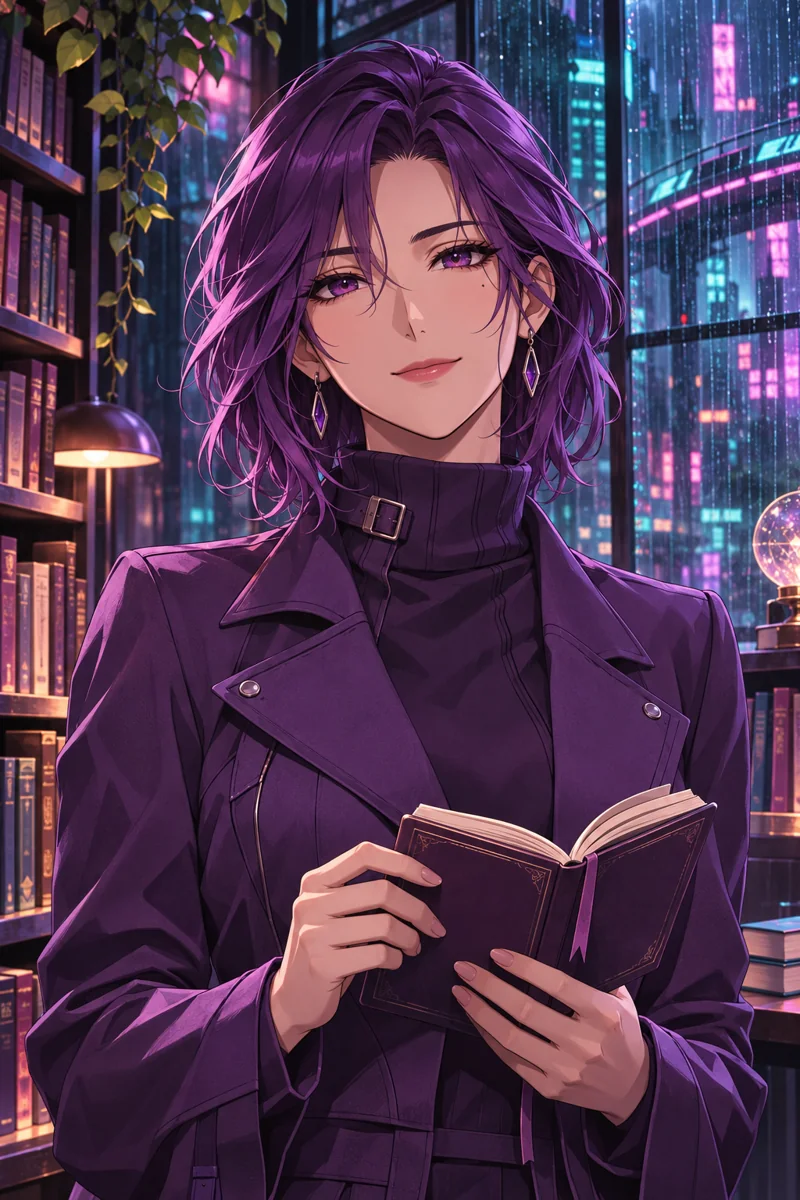
Choose an aesthetic that fits your fictional world. When writing an image brief, describe the setting, clothing, lighting and mood. Respect other people's rights and the platform's current content rules. The portraits on this guide are original illustrative concepts.
Video, voice and stories
Published product documentation describes image and video generation, voice messages and longer character stories. These are separate features rather than a promise of a live video call. Read the displayed chip cost before generating media.
Creating a character
Start with a few clear traits instead of an exhaustive biography. A memorable interest, a believable conversational tone and a defined fictional setting often give you more useful direction than a long list of conflicting instructions.
Which settings change the conversation?
The character-creation documentation separates visual choices from conversational settings. It describes options for personality, background, interaction style, voice and message length. Changing the portrait alone therefore does not fully describe how you want a character to communicate.
For a more useful comparison, keep the subject constant and change one setting. Ask the same ordinary question with a concise response style and then with a more detailed style. Notice whether the change improves the pace you wanted. The aim is to find a comfortable interaction, rather than to fill every setting with as many traits as possible.
A fictional adult travel photographer: patient and observant, interested in architecture, comfortable with short replies. Opening scene: choosing one place to photograph in an imaginary coastal town.
Sources & further reading: Lovescape · Character creation Explore Lovescape
Separate the character brief from the media brief
A character brief describes identity and recurring visual characteristics. A media brief describes a particular moment: setting, clothing, lighting, framing and, for video, a simple action. Keeping the two separate makes it easier to understand why a result changed.
Start with a single scene and inspect the result before making it more complex. If the lighting works but the setting does not, revise the setting first. Image consistency is not guaranteed, so judge the generated result itself instead of assuming that a saved profile makes every detail identical.
| Format | Useful first test | What to check |
|---|---|---|
| Text chat | One scene and an open question | Tone, reply length and continuity |
| Image | One character in a simple setting | Appearance, composition and displayed chip cost |
| Video | One clear action in a short scene | Selected model, length, resolution and cost |
| Voice message | A short exchange | Available voice, playback and plan access |
Sources & further reading: Lovescape Help Centre Explore Lovescape · Lovescape · AI limitations Explore Lovescape
Memory, editing and starting over
Lovescape's newer memory article describes continuity across sessions on all plans, including free. Its help centre also documents limitations and inconsistent recall. Keep a short note of essential story facts if a long narrative matters to you, and correct a mistaken detail explicitly rather than building several new scenes around it.
The profile guide distinguishes editing settings from removing content. Clear Chat keeps the character but removes its chat history; Delete Character removes the character itself. Both deletion actions are described as irreversible. If you only want a different tone, begin with the editable settings instead of resetting the conversation.
Sources & further reading: Lovescape · Permanent memory Explore Lovescape · Lovescape · AI limitations Explore Lovescape · Lovescape · Character profiles Explore Lovescape
A guide for your region
Readers in Spain can explore Spanish, Arabic, English and Romanian editions. A Spanish pricing page may still display US dollars. Compare the amount and period at checkout rather than assuming the website language determines the payment currency.
Sources & further reading
- Lovescape Help Centre Explore Lovescape
- Lovescape · AI limitations Explore Lovescape
Product features and checkout terms may change. Check the official page before subscribing.